


There has never been a more urgent moment to get your Java house in order. Enterprise Java is being squeezed between a rock (AI demands) and a hard place (the high and rising cost of Oracle Java licenses). Something has to give.
From Licensing Changes to AI, Java Challenges Are Growing
On one hand, Oracle’s repeated licensing changes have left many organizations paying far more than they used to. The shift to employee-based pricing in January 2023 hit organizations of all sizes hard, with many reporting cost increases of 200 to 500 percent.
On the other hand, AI is raising the stakes for Java infrastructure. In a recent piece for The AI Journal, “Born ready: why Java is vital to establish AI in the enterprise,” I made the case that, as enterprise CIOs move from AI experimentation into production, they will want the stability and maturity of Java underpinning their implementations just as they always have. That means getting the runtime environment right matters more than ever. And this is an urgent need for the majority of companies: According to the “Azul 2026 State of Java Survey & Report,” 62% of organizations now use Java to code AI functionality — up from 50% last year — reflecting a shift toward integrating machine learning models with existing Java applications.
The Good News: You Can Migrate to OpenJDK
The good news is that migrating from Oracle JDK to OpenJDK is far less daunting than most people expect. As I write in OpenJDK Migration for Dummies: “At its simplest, migration consists of installing the new OpenJDK distribution and configuring your application to use it instead of the previously installed JDK. Ninety-nine percent of the time, your application will work perfectly.” The challenge is not the migration itself; it’s knowing what to look for, how to plan it properly, and how to make sure you don’t leave compliance loose ends behind.
That’s what next week’s webinar is about.
I’ll be walking through the updated OpenJDK Migration for Dummies, 2nd Edition — which essentially is the distillation of the experiences of hundreds of companies who have migrated from Oracle JDK to OpenJDK.
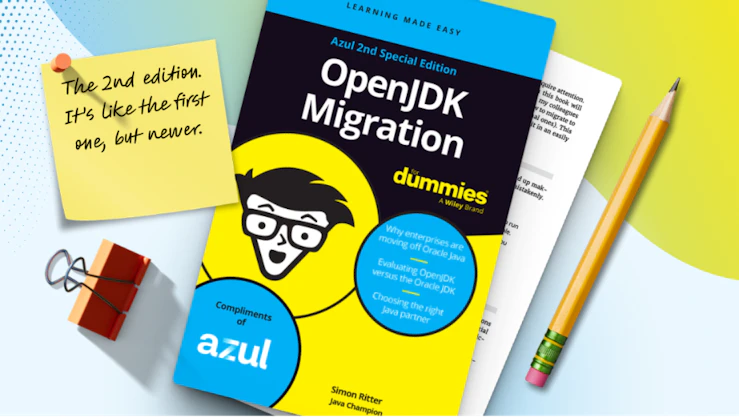
This Is Where You Can Get an Actionable Migration Strategy
I’ll be covering why enterprises are moving off Oracle JDK, what a migration actually involves, how to choose the right OpenJDK distribution, and why the clock is ticking for anyone still on JDK 21. You’ll leave with a practical, actionable migration strategy and a clearer picture of the risks of staying put.
But this book – and this webinar – are more than a technical migration manual; our intent is to provide a guide toward a broader, more strategic enterprise transformation and governance narrative. I’ll walk you through our three-step process that puts strong emphasis on compliance, governance, operational discipline, ITAM tooling, and ongoing lifecycle management. With challenges like Mythos arising, compliance is taking on new urgency as it moves beyond the possibility of accidental Oracle reinstalls and license liability to the hard reality of legal patch management obligations vis-à-vis security regulations.
The session runs three times to cover every time zone — pick the one that works for you:
- APAC — May 19, 2026, 9:00 p.m. PDT: Register here
- EMEA — May 20, 2026, 5:00 a.m. PDT: Register here
- North America — May 20, 2026, 9:00am PDT: Register here
I hope to see you there.


